This week, Namibia made international headlines as President Netumbo Nandi-Ndaitwah announced that, starting in 2026, all tertiary education at state-run universities and vocational training centres will be fully subsidised by the government. This historic policy is not just a win for Namibian students, it is a challenge to neighbouring countries like Lesotho to reflect on the sustainability, equity, and vision of their own higher education systems.
Lesotho’s Current Model
In Lesotho, the National Manpower Development Secretariat (NMDS) serves as the primary financier for tertiary education. However, the system is under immense strain. A 2015 World Bank report revealed that only about 4% of NMDS loans are recovered annually, effectively rendering the scheme a de facto grant system. This low repayment rate undermines the sustainability of the fund, limiting opportunities for new students and placing additional pressure on the national budget.
The Vicious Cycle of Debt and Unemployment
The repayment challenges are exacerbated by high youth unemployment. According to Finance Minister Dr. Retsélisitsoe Matlanyane in her budget speech, findings from the 2024 Labour Force Survey reveal that out of 760,230 young Basotho aged 15 to 35, approximately 145,087 are unemployed. Nearly 39% of youth actively searching for jobs struggle to find employment. The overall youth unemployment rate stands at 38.9%, with young women facing greater difficulties at 40.8%, compared to 37.1% for young men. Additionally, only 31.48% of young people are either employed or actively seeking work. A significant number have lost hope, with over 226,857 no longer searching for employment. This economic reality makes it difficult for graduates to repay their NMDS loans, further straining the fund and limiting access for future students.
Quality Education: Bridging the Gap
While Lesotho has made strides in increasing access to education, quality remains a significant concern. The introduction of free primary education in 2010 led to higher enrollment rates. However, disparities between public and private schools persist, with private institutions often offering superior resources and outcomes. Does free always mean quality? If it were, I believe the same people who introduced free education would be taking their kids to the very ‘free’ schools.
Recently, the Ministry of Education has initiated efforts to integrate artificial intelligence (AI) into the curriculum. However, the success of such initiatives hinges on the preparedness of educators. Are the present teachers relevant? How often do they upgrade their studies? I believe it is high time it becomes mandatory for teachers to upgrade while temporarily being substituted by those with necessary skills.
Building the Foundation for Economic Sustainability
Investing in early childhood education (ECE) is crucial for Lesotho’s long-term economic development and human capital formation. On a lighter note, recognising this, Lesotho has partnered with organisations like UNICEF and the Global Partnership for Education to enhance ECE through initiatives such as the “Better Early Learning and Development at Scale” (BELDS) program.
Early Retirement As Pathway to Youth Employment
Another strategy to combat youth unemployment can be the implementation of early retirement policies. By encouraging older employees to retire earlier, opportunities can be created for younger individuals entering the workforce. This also making right by the education system, with teachers having relevant, necessary skills.
The Government of Lesotho’s Public Service Reform report suggests that reducing the retirement age to 50 could be a component of a holistic youth employment policy, although political will in implementation becomes a challenge.
Namibia’s bold step should serve as a wake-up call for Lesotho. Ensuring equitable access to higher education is not just a matter of social justice-it is an economic imperative. By rethinking its higher education financing model, investing in teacher training, and implementing policies to boost youth employment, Lesotho can build a more sustainable and inclusive future.
Dear Reader,
For decades, Lesotho has occupied a quiet yet essential place in the global fashion supply chain. In industrial zones across the country, thousands of workers—primarily women—have produced garments for global brands such as Levi’s, Jean Wears, Calvin Klein, and Walmart. These clothes, stitched in Lesotho’s factories to internationally accepted standards, are shipped abroad, rebranded, and then reintroduced into the local market as premium products.
Despite their origin, many Basotho consumers continue to attach higher value to imported labels, often overlooking local equivalents—even when the difference is only the name on the tag. This suggests the issue is not rooted in production capacity or quality, but rather in perception and psychological conditioning.
Lesotho has already demonstrated the technical ability to meet global expectations. The infrastructure exists. The workforce is skilled. The international demand is present. But domestically, the narrative still leans toward foreign validation. Garments made in Lesotho are rarely worn with pride unless first endorsed elsewhere.
This has resulted in a curious paradox: exporting quality while importing prestige. The transformation of a product’s perceived value lies not in its making but in its marketing—something Lesotho has yet to master at home. A Levi’s tag confers confidence; a local tag often does not. The problem, therefore, is not lack of production—it is lack of belief.
Recent developments in global trade highlight this internal contradiction. Earlier this month, Minister of Trade Mokhethi Shelile addressed the significant tariff disparity between Lesotho and the United States. While Lesotho imposes tariffs of up to 99% on U.S. imports, it faces a 50% tariff from the U.S.—the highest among countries affected by the new policy. This is in the context of a deeply lopsided trade relationship: Lesotho exports goods worth M4.7 billion to the U.S., but receives only M56 million in imports.
These heavy tariffs, while economically constraining, may serve an unintended but valuable purpose. They should be seen not only as penalties but also as necessary mind openers. They force a confrontation with the long-standing dependency on foreign markets and labels. They call into question why local consumers and producers continue to seek affirmation from outside, despite already meeting international standards.
Within the textile industry, the imbalance extends beyond trade. Only 40% of the work done in Lesotho’s factories is attributed to Basotho workers. The remaining 60%—which includes design, fabric sourcing, and value addition—belongs largely to external entities. Much of the industry’s USD 240 million in export value ultimately flows out of the country. One foreign firm reportedly shipped 40 containers daily, a telling indicator of who benefits most from Lesotho’s industrial output.
On the continental stage, the opportunity remains underutilized. WTO Director-General Ngozi Okonjo-Iweala recently pointed out that Africa spends $7 billion a year on textile imports, yet countries like Lesotho, which already produce these goods, are missing from the equation. Despite exporting over $1.14 billion in 2023—led by diamonds and garments—Lesotho has not fully tapped into African markets.
According to the Observatory of Economic Complexity (OEC), Lesotho’s exports have grown by $127 million since 2018. South Africa, Belgium, the United States, the UAE, and India are the top destinations. Still, the country’s presence in regional trade, particularly in textiles, remains muted.
This gap between potential and recognition is not a matter of policy alone. It is psychological. The inability to perceive local products as equal in value to imported ones reflects a deeper issue about identity, self-worth, and economic independence. Until this mindset shifts, Lesotho may continue to export craftsmanship and import confidence.
Tariffs may sting in the short term, but they expose a longer-standing discomfort with self-reliance. They are an invitation—not to retreat—but to reflect. Perhaps Lesotho’s most significant economic challenge is not what it lacks, but what it refuses to see in itself.
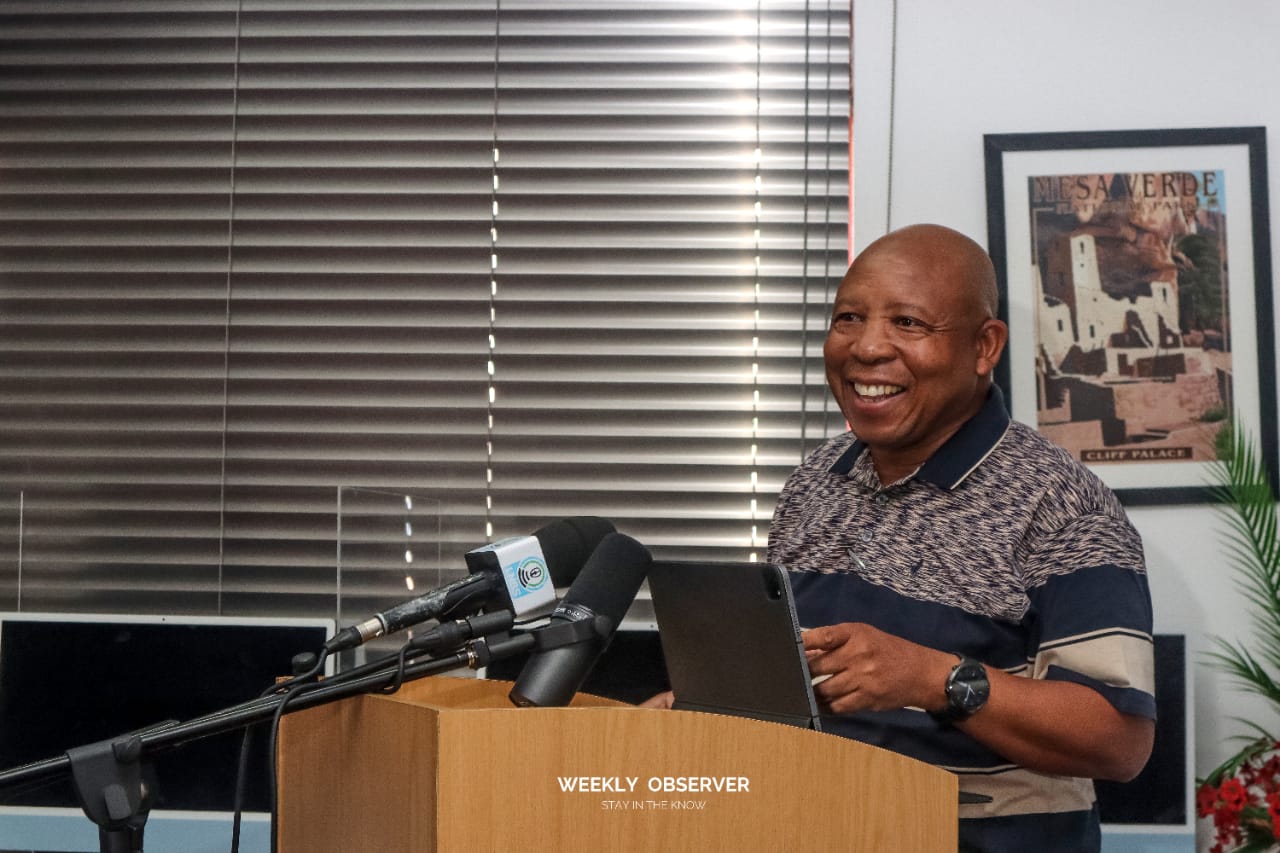
Today, young people gathered at the American Corner in Maseru to engage in an important conversation on reducing Lesotho’s dependence on foreign aid. The dialogue, organized jointly by youth from different backgrounds, marked a growing movement toward national sustainability, especially as the country approaches 60 years of independence in 2026.
Former Prime Minister and former Minister of Finance and Development Planning, Dr. Moeketsi Majoro, delivered the keynote address, challenging the youth to rethink Lesotho’s future. Referring to global shifts, including the United States’ withdrawal of certain aid packages under the Trump administration, Dr. Majoro urged Basotho to embrace a “Lesotho First” mindset.
“Trump told 192 countries to prioritize themselves — and so should Lesotho,” he said. “What have 60 years of foreign aid really done for our country?”
He further warned that privilege often perpetuates itself, while the underprivileged remain stuck without bold, structural change.
One of the organisers of the event, Kananelo Boloetse, stated that the discussion was inspired by social media debates questioning why Lesotho continues to celebrate milestones like the Bicentennial while still depending on donations, such as food aid, proving the country’s inability to feed its people.
Boloetse further clarified that today’s conversation was not simply a reaction to foreign critiques, but part of a long-standing, necessary discussion for the country’s future. A key outcome of the event was a proposal to launch district-wide dialogues starting in June. Insights from these discussions will be compiled into a vision document (Independence Charter) with objectives and strategies to be submitted to government and used as a possible strategic planning framework, also necessary for universities and youth programs.
Participants reflected critically on previous national plans such as Vision 2020 and the National Strategic Development Plan (NSDP), citing lack of accountability and follow-through. There was a collective call for young people to take ownership of this new effort, grounded in Section 20 of Lesotho’s Constitution, which guarantees citizens the right to participate in governance.
“The future belongs to us, and it’s time we shape it ourselves,” one participant concluded.
Maseru
The Minister of Trade and Small Businesses, Mokhethi Shelile, has responded to concerns over the 50% increase in reciprocal tariffs imposed by the United States.
Addressing the issue yesterday, he clarified that Lesotho’s tariffs on U.S. imports—including those influenced by currency manipulation and trade barriers—already stand at a staggering 99%. In contrast, the U.S. has imposed a 50% tariff on Lesotho, making it the highest-charged nation under this new policy.
Minister Shelile attributed this significant tariff disparity to an ongoing trade imbalance. Lesotho exports 99% of its goods to the U.S., while only 1% of its imports come from the U.S.
He highlighted that Lesotho’s exports to the U.S. are valued at approximately M4.7 billion, whereas U.S. imports into Lesotho amount to just M56 million further emphasizing the disproportionate nature of the trading relationship.
Shelile also shed light on a major challenge within Lesotho’s textile industry. Despite the country’s strong presence in this sector, only 40% of the work done in local factories involves Basotho workers.
The remaining 60% of textile production value—encompassing fabric sourcing and design—originates from other countries. As a result, a significant portion of the USD 240 million generated from textile exports benefits foreign economies. He illustrated this by citing a Chinese firm that ships 40 full containers daily, showcasing the international influence in Lesotho’s textile production.
Another critical issue raised was the lack of proper data on Lesotho’s use of U.S. digital services such as Android and Microsoft. Shelile emphasized the need for improved tracking of digital trade, identifying digitization as a key area requiring urgent investment to ensure comprehensive trade data collection.In response to concerns about production standards, the Minister announced that a new laboratory, valued at M90 million, is set to be established in Ha Tsolo.
Expected to be operational within two years, this facility aims to enhance Lesotho’s production quality and boost its industrial capabilities.The Principal Secretary (P.S.) in the Ministry of Trade and Small Businesses also stressed the importance of investing in the domestic market as a strategic response to potential job losses caused by the tariff hikes.
She noted that the Ministry is actively working to create employment opportunities by equipping local businesses to supply established retail stores within the country.
Meanwhile, the Minister of Finance and Development Planning, Dr. Retšelisitsoe Matlanyane, and the Minister of Foreign Affairs, Hon. Lejone Mpotjoane, reaffirmed Lesotho’s strong diplomatic ties with the U.S.
They urged the public to view the tariff increase as an opportunity for economic reflection and sustainable growth, rather than a punitive measure.
Local economist, Thabo Qhesi, warned that the increased tariffs could be catastrophic, not only for the textile industry but also for sectors such as transport, retail, financial services, and property development.
He expressed doubt that the government has a backup plan to address the potential job losses and economic gaps that could arise from these changes. “I don’t see the government having a fallback position to address the gaps to be created. It is clear that the production process cannot continue to export to the U.S. market where companies will now be forced to pay 50% tariffs. They will likely relocate to regions where it remains more profitable, especially after having enjoyed duty-free, quota-free access under AGOA since 2000,” Qhesi explained. He also highlighted that Lesotho’s garments are bought by major international brands like Gap, Levi’s, Reebok, Calvin Klein, and Jean’s Wear, emphasizing the importance of the sector to the country’s economy.
Today, the Internet Society Lesotho Chapter (ISOC Lesotho), in collaboration with the Lesotho Communications Authority (LCA) and the Internet Corporation for Assigned Names and Numbers (ICANN), commemorated Universal Acceptance (UA) Day. The event sought to ensure a more inclusive and multilingual internet by bringing together industry leaders, policymakers, developers, and digital innovators to discuss and promote the adoption of UA-compliant systems. This initiative is crucial in making the internet accessible to all, regardless of language or script.
During the event, Mark Elkins highlighted Lesotho’s challenges in integrating its native language into digital platforms. He noted that Sesotho words such as tšea (loincloth) and tsea (laugh) appear similar but have completely different meanings due to diacritical marks, which are often not supported online. This lack of language accessibility hinders the effective use of Sesotho in domain names and websites. The event aimed to educate developers and industry leaders on the importance of making Sesotho more accessible online.
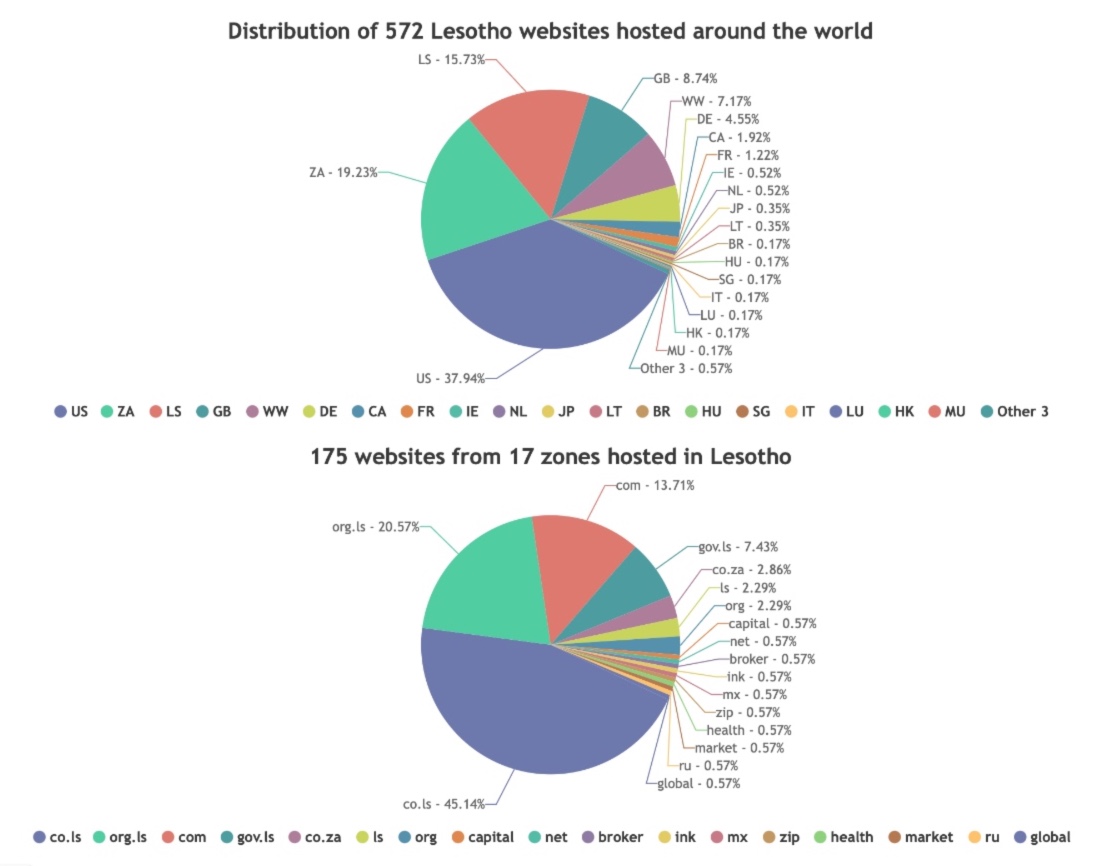
Furthermore, Elkins pointed out that, according to Africa NDS Observatory statistics, only about 15% of Lesotho’s websites are locally hosted. This results in significant economic opportunities being lost to external hosting providers, as well as concerns regarding data privacy and security.
Speaking on behalf of ISOC Lesotho, Mr. Liaho Monaheng emphasized that Universal Acceptance is more than just a technical issue—it is a matter of digital equity and inclusion. UA Day is an initiative led by ICANN to raise awareness and drive action around a fundamental principle: all valid domain names and email addresses—regardless of language, script, or length—should be accepted equally by all internet-enabled systems. “This day is not just about technology—it is about inclusion, digital equity, and the right to participate fully in the digital economy, no matter what language you speak or where you are from,” Monaheng stated.
ISOC Lesotho has been at the forefront of efforts to enhance digital accessibility and inclusion. Their initiatives include championing digital literacy and internet governance, promoting local content and infrastructure development, including the refurbishment of the Lesotho Internet Exchange Point (LIXP), ensuring that no one is left behind in the digital age, and strengthening multistakeholder collaboration across various sectors.
ICANN, with its mandate to oversee the global domain name system (DNS), plays a crucial role in allocating domain names (such as “.com,” “.org,” and “.net”) and IP addresses. The event also addressed issues of trademark protection and intellectual property in DNS, as many domain names reflect registered trademarks to safeguard brand identity and prevent misuse. A key concern discussed was cybersquatting, where individuals or entities register domain names identical or confusingly similar to established brands, potentially leading to legal and commercial disputes. ICANN’s role in preventing such practices was emphasized as essential in maintaining a fair and secure digital ecosystem.
The domain name system has also evolved to become more diverse and flexible, moving beyond traditional three-letter domains with the introduction of generic top-level domains (gTLDs) and Internationalized Domain Names (IDNs). These advancements allow greater linguistic representation online, reinforcing the importance of Universal Acceptance in fostering a truly global and multilingual internet.
As discussions on digital inclusivity continue, Lesotho faces legislative gaps that hinder progress. Despite the Data Protection Act of 2011 mandating the establishment of a Data Protection Authority, this body has yet to be formed. Additionally, the Cybersecurity Bill remains stalled in parliament, further delaying necessary legal protections in the digital space. Addressing these regulatory shortcomings is imperative for ensuring a safe and inclusive digital future for Lesotho.
Maseru
In a world where gender equality remains a critical issue, the United Nations Development Programme (UNDP), through its Accelerator Lab, recently took a bold step forward by hosting a transformative assessment workshop dedicated to strengthening women-led enterprises.
The workshop, titled Her Empire, brought together trailblazing women from various sectors to share insights, foster collaboration, and inspire actionable change. It concluded with a certificate ceremony celebrating the participants’ achievements.
The workshop, held just days after International Women’s Day, marked the second cohort of the initiative and reinforced UNDP’s commitment to achieving the Sustainable Development Goals (SDGs), particularly Goal 5, which focuses on gender equality.
“Today we celebrate a significant milestone for these businesswomen on their journey toward the development and growth of their enterprises. In August 2024, these women embarked on an intensive 10-day boot camp where they were trained in various core business functions and explored existing market conditions,” said Teboho Daniel Molopi, Small and Medium Enterprise (SME) Advisor.
Molopi highlighted the rigorous coaching and mentorship program that followed in October and November 2024, which included on-site visits to address challenges head-on.
He also stressed the need for climate-resilient and smart technologies to mitigate the negative effects of climate change, such as the impacts of drought and hazardous rainy seasons, on these enterprises.
Although some products from the women-led enterprises have made their way onto the shelves of major supermarkets like Pick and Pay, Molopi noted that they continue to face challenges in accessing larger, more lucrative international markets.
He encouraged the entrepreneurs to remain determined in their pursuit of success, emphasizing their potential to inspire future generations of women entrepreneurs and to create more jobs in the process.
Dr. Jacqueline Olweya, Resident Representative at UN Lesotho, also emphasized the timeliness of the event. “We recently celebrated International Women’s Day, and this event coincides with the national budget process, which is ongoing and will culminate at the end of March,” she said.
Dr. Olweya expressed hope that the presence of the Ministry of Trade, Industry, and Business Development at the event would help secure resources to create an enabling environment for market access, credit facilities, and financial support, with a special focus on women and youth enterprises as well as other vulnerable groups, including women with disabilities.
Dr. Olweya also addressed a significant challenge faced by businesses in Lesotho, particularly women-led enterprises—the difficulty in meeting international standards. This issue, she explained, prevents these businesses from accessing international and regional markets.
She praised the inclusion of enterprises from four districts and five key sectors—agriculture, tourism, manufacturing, ICT, and services.Noma Hoohlo, an alumna of the program, expressed heartfelt gratitude to Dr. Olweya and the entire UNDP team for their dedication to advancing gender equity in enterprise development.
“Through your efforts, you have empowered us as women-led enterprises and paved the way for our active participation in driving Lesotho’s economic growth,” Hoohlo said.
Hoohlo also pledged that the participating enterprises would play a crucial role in job creation and environmental protection.
She urged her fellow participants to become beacons of inspiration for other women and youth, saying, “Let us be the inspiration that other women and youth need to realize their dreams. Through this ripple effect, we will see a transformed Lesotho—a country that is empowered, hopeful, vibrant, and prosperous.”
Maseru
In Lesotho’s High Court, justice is not determined by law and evidence alone—language holds a powerful, often decisive role. The words of lawyers, the crafted arguments, and the strategic use of rhetoric all have the potential to shape the outcome of a case. While legal rhetoric—the art of persuasion in the courtroom—can ensure fair trials, it also creates significant barriers for those unable to navigate its complexities. In a system where access to justice should be universal, the intricate language of the law often serves to exclude the very people it is meant to protect.
In a society where access to justice should be a fundamental right, the language of the law often excludes the very people it is meant to protect. Many ordinary citizens, lacking formal legal education, struggle to understand the legal jargon, convoluted sentence structures, and Latin expressions that dominate court proceedings. This linguistic gap creates an imbalance of power, where those who can afford skilled legal practitioners gain an advantage, while the marginalized are left to navigate a system designed for the elite.
The power of legal rhetoric lies in its ability to shape perception. Lawyers do not merely present facts; they frame narratives, appeal to emotions, and establish credibility through strategic language use. Aristotle’s three pillars of persuasion—ethos (credibility), pathos (emotional appeal), and logos (logical reasoning)—are deeply embedded in the practice of law. A well-crafted legal argument does not just state the law; it convinces, persuades, and influences.
However, while rhetoric is an essential tool for advocacy, it can also be a weapon of exclusion. The excessive use of legal jargon distances the law from the people it serves. Latin phrases such as habeas corpus or stare decisis may add to the prestige of legal discourse, but they also alienate those who do not speak the language of the courts. For many defendants and plaintiffs, stepping into a courtroom feels like entering a world where words hold power they cannot access—a world where justice is spoken in a language they do not understand.
This exclusion is particularly evident in cases involving gender-based violence, where survivors often struggle to articulate their experiences in legally persuasive terms. A woman seeking justice against an abusive partner may find her emotional testimony dismissed in favor of a defense attorney’s meticulously crafted argument, laden with legal technicalities. The legal system, designed to be impartial, can sometimes become a space where language determines whose voice is heard and whose suffering is validated.
Beyond individual cases, legal rhetoric influences judicial decision-making. Judges, tasked with interpreting arguments and applying the law, are not immune to the power of persuasive language. A well-structured argument, presented confidently and backed by legal precedent, carries weight. Lawyers who master the art of persuasion are often more successful, not necessarily because their clients have a stronger case, but because their rhetorical skills make their arguments more compelling.
This reliance on rhetoric raises fundamental questions about fairness. Should justice be influenced by how well an argument is framed rather than the truth it represents? If a defendant with a skilled lawyer is more likely to win a case than one with a less experienced advocate, does that not suggest that justice is unequally distributed? These questions highlight the urgent need to reform how legal language is used in Lesotho’s courts.
One way to bridge this gap is by simplifying legal discourse. Many countries have adopted plain language policies to ensure that legal documents are written clearly and comprehensibly to non-lawyers. If Lesotho’s courts were to implement similar measures, it would significantly improve public access to justice. Legal arguments should not be a maze of complex terminology but a straightforward presentation of facts and principles that every citizen can understand.
Furthermore, legal education must prioritize rhetorical training, not just for lawyers but also for judges. Understanding how language shapes legal outcomes can help ensure that judicial decisions are based on substance rather than style. Court clerks and paralegals should also be trained to assist individuals who may struggle with legal terminology, ensuring that no one is excluded from the justice system simply because they do not speak its language.
Legal aid services must also play a stronger role in addressing linguistic barriers. Many individuals facing legal challenges do not have the financial resources to hire top legal practitioners. Strengthening legal aid programs and providing access to well-trained advocates can help level the playing field, ensuring that justice is not reserved for those with wealth and influence.
Ultimately, the reform of legal language is about more than just simplifying words—it is about making justice truly accessible. A legal system that relies on rhetoric must also recognize its responsibility to ensure that all citizens, regardless of their educational background or economic status, can fully participate in the process. Justice should not be a privilege of the articulate; it should be a right for all.
The language of the law should empower, not exclude. If Lesotho is to build a legal system that serves all its people, it must start by breaking down the linguistic barriers that prevent so many from accessing justice. In a democracy, the right to a fair trial should not depend on one’s ability to navigate legal rhetoric—it should depend on truth, fairness, and equality before the law.
Maseru
Revenue Services Lesotho (RSL) and the National University of Lesotho (NUL) have formalized a long-standing collaboration with the signing of a Memorandum of Understanding (MoU). The signing, which took place at the NUL campus, marks a significant step in solidifying the two institutions’ commitment to achieving shared goals in various sectors, including law, social sciences, management, taxation, and economic development.
In his opening remarks, Professor Olusola Fajana, Vice Chancellor of NUL, expressed his gratitude towards RSL for their willingness to partner with the university. He described the signing of the MoU as not just a formal agreement, but a landmark moment that symbolizes the beginning of a long-term, fruitful partnership. The collaboration is set to foster knowledge sharing, capacity building, and collaboration in critical fields that align with national priorities.
“This MoU we are signing today is a testament to our commitment to creating a conducive environment for research, innovation, and community engagement,” Professor Fajana remarked. “By working together, we aim to develop cutting-edge solutions to address the complex challenges facing our nation, particularly in areas of taxation, revenue management, and economic development.”
Professor Fajana emphasized the role of NUL in driving economic growth, improving governance, and enhancing the well-being of the citizens of Lesotho through such partnerships. He conveyed confidence in the positive impact this collaboration would have on both institutions, contributing directly to achieving Lesotho’s national development goals.
The MoU signifies the start of a new chapter in the relationship between RSL and NUL, with both parties excited about the potential outcomes of their combined efforts. The agreement sets the stage for future initiatives that will benefit both the academic community and the broader nation, particularly in areas critical to the country’s economic advancement.
To the keen and observant observer,
Today, I write as we all witness the trending uproar over former U.S. President Donald Trump stating that he has never heard of Lesotho. While many Basotho seem to take offense, I find the situation rather amusing.
Vele, what is our country known for? What unique value do we bring to the world? What is our competitive advantage? If anything, this should serve as a moment of deep reflection rather than blind outrage. Instead of reacting emotionally, perhaps we should ask: Why doesn’t the world, let alone a global leader, recognize Lesotho?
This situation reveals uncomfortable truths about our nation. What do we have to showcase on the global stage besides being a landlocked kingdom dependent on external aid? Is it our textile industry, which barely competes with global markets? Is it our diamonds, whose value benefits only a handful? Is it our tourism, which remains untapped despite breathtaking landscapes? The reality is, we have work to do.
But my interest is this: What happened to the bold statements that “Lesotho can never conform to LGBTQI+ ideals as a Christian country”? We sit in judgment of our neighboring nations, yet the same Western forces we praise for donations are the ones funding LGBTQI+ programs within our borders. We cannot have it both ways.
Just last week, a local newspaper reported that a Lesotho MP was allegedly offered USD 1,300 to vote in favor of a transgender rights law. Such headlines barely cause a ripple in our collective consciousness anymore. Transparency and accountability? Those are concepts we will only see in heaven! Even our so-called cultural “norms” are applied selectively—moralizing in public while engaging in the very acts we condemn behind closed doors.
Let’s also consider the American taxpayer, whose hard-earned money funds small, struggling economies like ours. How fair is it that we remain dependent on foreign aid, year after year, without a concrete plan for self-sufficiency? At what point does Lesotho wean itself off international handouts and stand on its own?
Now that the spotlight is briefly on us, what do we have to offer? Instead of lamenting Trump’s ignorance, perhaps we should capitalize on the unexpected free marketing from such a globally influential figure. This is our chance to tell our story, showcase our strengths, and redefine our identity beyond just being another struggling African nation.
Rather than outrage, let us use this moment as motivation. If we truly want Lesotho to be known, we must work toward making it worth knowing.
Nts’oekhe
Lesotho is once again preparing to celebrate one of its most significant cultural and historical events, the Moshoeshoe Walk. Now in its 18th edition, this annual pilgrimage pays tribute to King Moshoeshoe I, the founder of the Basotho nation. The event retraces his legendary journey of resilience and unity, drawing participants from across the globe to experience history on foot.
The walk, scheduled to take place from March 6th to 8th, with departure set for March 5th at 10 a.m., will cover a historic route from Menkhoaneng to Thaba Phats’oa, Malimong, and ultimately, Thaba Bosiu, the sacred mountain fortress where King Moshoeshoe I established the Basotho nation. Along the way, walkers will immerse themselves in traditional Basotho heritage, retracing the footsteps of a visionary leader who united scattered clans to form a powerful kingdom in the 19th century.
According to Matela Molapo, the Public Relations Officer of the Lesotho Tourism Development Cooperation (LTDC), the Moshoeshoe Walk is more than just a commemoration, it is a tourism drawcard that enhances Lesotho’s visibility on the global stage. “The walk attracts tourism, as many people visit Lesotho to explore. It also serves as a marketing tool, as those who participate go back home and share their experiences. This word-of-mouth promotion plays a crucial role in encouraging others to learn about our culture, history, and monarchy,” Molapo stated.
One of the walk’s major sponsors, Maluti Mountain Brewery (MMB), recognizes its cultural significance. Charma Mwansa, representing MMB, emphasized how the event strengthens cultural identity. “This is a prestigious walk that takes us back to our roots. Being part of it means contributing to our own culture. This year, we are running a campaign called ‘Back to Our Roots’ to encourage people to reconnect with their heritage,” Mwansa said.
Beyond cultural preservation, the Moshoeshoe Walk has become a beacon of community development. The brainchild of Thabo Maretlane, the event has grown tremendously, attracting international media and participants from countries such as the United Kingdom, Austria, China, Nigeria, and Kenya. Maretlane highlighted the walk’s impact on local communities along the route. “We have empowered local communities in various ways. Every year, we leave a mark, whether it’s building schools, churches, or toilets in the area. We also support local organizations such as Hlokomela Banana and other community initiatives. This year, we expect around 1,000 participants,” he revealed.
While Lesotho’s tourism industry has made strides, Maretlane believes there is still work to be done to position the country more prominently on the global tourism map. “The walk has grown significantly, but Lesotho remains behind when it comes to tourism, even after 200 years of nationhood. Our goal is to ensure that other parts of the country receive recognition, not just a select few tourist destinations,” he added.
For participants, the Moshoeshoe Walk is not just a physical challenge but a journey of reflection, patriotism, and cultural immersion. Dressed in traditional Basotho blankets, carrying walking sticks, and singing songs, walkers experience a deep connection with their ancestry, reliving the struggles and triumphs of King Moshoeshoe I.
As the 18th edition approaches, anticipation is high, with both local and international participants eager to step into history, embrace their roots, and walk in the footsteps of a great leader. The Moshoeshoe Walk continues to be a living tribute to Lesotho’s rich past and an inspiration for future generations.