



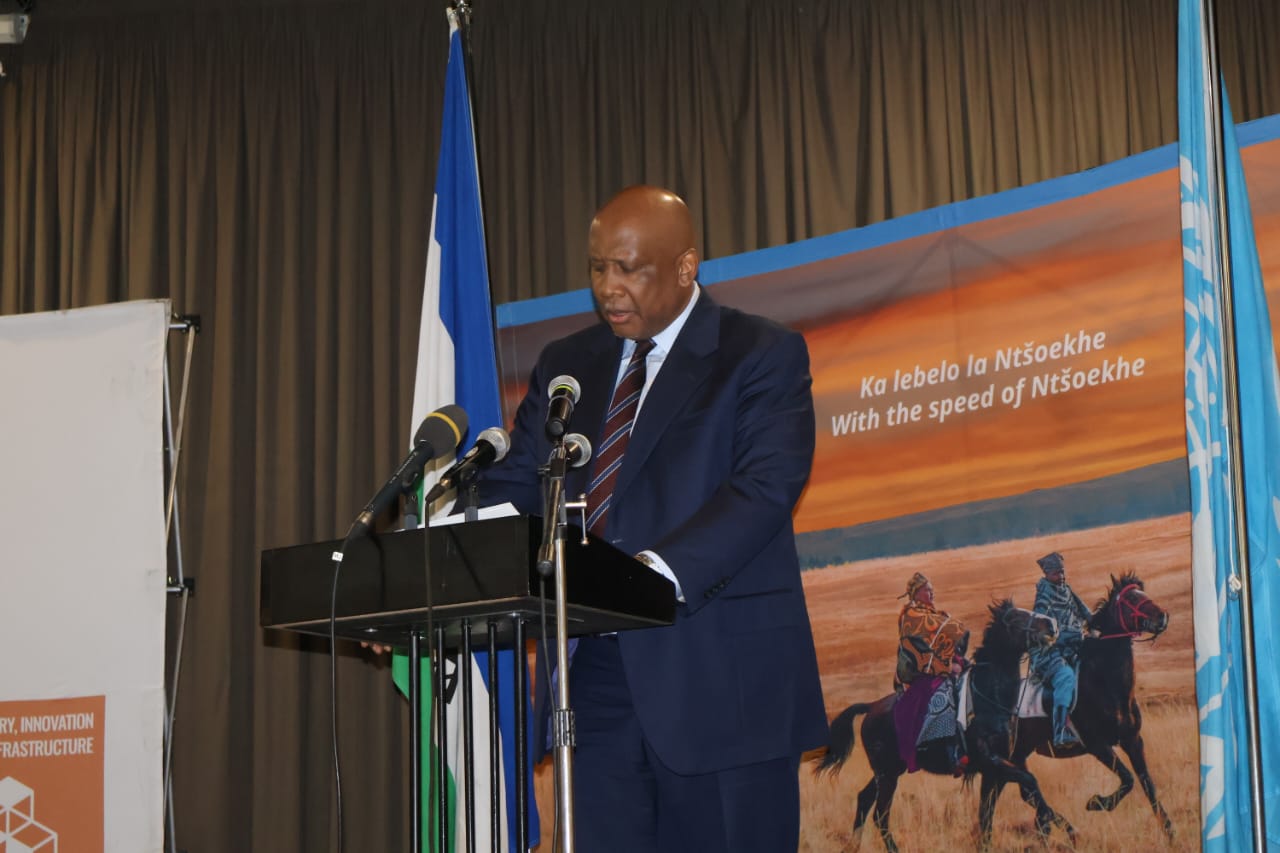
His Majesty King Letsie III has issued a clarion call for all stakeholders to join hands and improve Lesotho’s agricultural sector as well as to alleviate poverty.
The head of state mentioned that among others, Lesotho should prioritise agriculture, provide sufficient food for its people while also commercialising its agriculture into international markets.
He added that the is a need for cooperation from development partners to strive for poverty eradication and to strategize on how best this can be achieved.
Speaking on his capacity as the African Union (AU) champion for nutrition at the High–Level Dialogue on Food Systems with the United Nations (UN) delegates in Maseru on Tuesday, the king underscored the role of organizational engagement and cooperation in creating vibrant and sustainable food systems for Lesotho.
He emphasised that collective efforts are imperative to optimize resources and expend the financial attitude necessary for a sustainable future. It is essential that as a nation, we strive towards commercializing agriculture,” he said.
His Majesty stated that agricultural improvement in Lesotho can be attained by collaborating with various stakeholders. He also urged the government of Lesotho to initiate policies that fosters inclusive growth and private sector investment and also suggested that policies should offer incentives for investment, facilitate small programs, access to finance , markets, and technology, ad enhance water access.
He highlighted the importance of the private sector in capitalizing on these opportunities by investing in the sector, seeking operational investment s, and participating in public–private partnerships.
Moreover, Food and Agriculture Organisation Directo–General, Dr QU Dongyu as part of the UN delegates pointed out that Africa is the continent with the highest food insecurity and thus strengthening partnerships to tackle this challenge. He said it is high time Lesotho should realise its potential and be self-sufficient.
He said that Lesotho has arable land, water and atmosphere suitable for agriculture and adequate resources can help Lesotho to overcome hunger. “Collaboration is key in addressing regional food security challenges, while prioritizing national objectives, as reflected in the FAO Country Programming Framework.
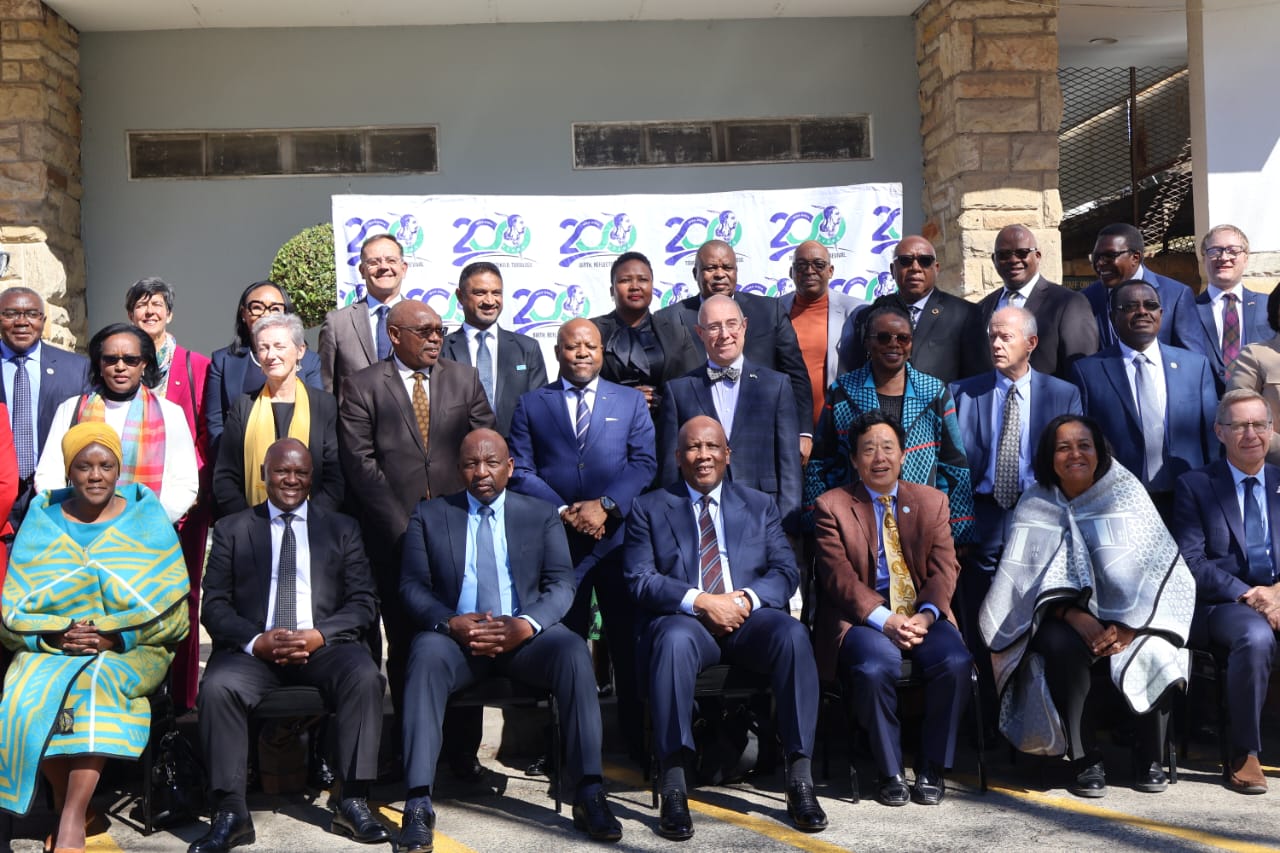
This Framework, together with the UN agencies ‘strategies, are complementary in ensuring that Lesotho achieves its national objectives of defeating poverty, hunger and malnutrition . Let us continue to work as one UN to the benefit of the people of Lesotho, the region, the continent and beyond,” he said.
For her part, the UN Lesotho’s Resident Coordinator Amanda Khozi Mukwashi said the challenges the country face are significant from poverty , food insecurity, climate change, gender-based violence, human rights violations, to unemployment are barriers of prosperity.
She stressed that Lesotho has potential to achieve food security if only Basotho, the government and stakeholders can work collaboratively towards implementing sustainable solutions to overcome key the key factors mentioned . She said the UN is more than ready to help the government to overcome hunger.
“Through community involvement, robust private partnerships, and collaborative efforts, we can forge sustainable solutions. These solutions do not necessarily have to come from outside, they are embedded in the communities. We see it every time we visit different villages and different households across this country, “she said.
Meanwhile, different stakeholders outlined different strategies and recommendations that the government of Lesotho needs to explore in order for Lesotho achieve food security and a future where it is self-sufficient.
According to the Minister of Communications, Science and Technology, Nthati Moorosi, Lesotho can achieve agricultural digitalization. She shed light on the existing technologies that it can expedite this goal and also, she commended Basotho youth for engaging deep into technology innovation in the quest to save Lesotho from devastating agricultural challenges.
“Technology throughout the world has shaped agriculture. Even in Lesotho regardless of the small steps that we are taking, technology is beginning to impact agriculture. We are also in the process of finding ways of leveraging on technology to revolutionise agriculture and enhance food production and increase sustainability and nutrition.
We got the highest call to commercialise agriculture, and we must ensure that technology and innovation play a part in commercialising agriculture. The solutions are with the youth, and we are looking to partner with them together with the private sector to come up with such solutions,” she said.


